
Goddess of the Strand 3/3
Edition of 3 ~ 32×48 inches
$2,450
- Last one of an edition of 3 archival photographs
- Signed and numbered by artist Aaron Knight
- Image: 32×48 inches/81×122 cm
- Paper: 34×50 inches/86×127 cm
1 Available
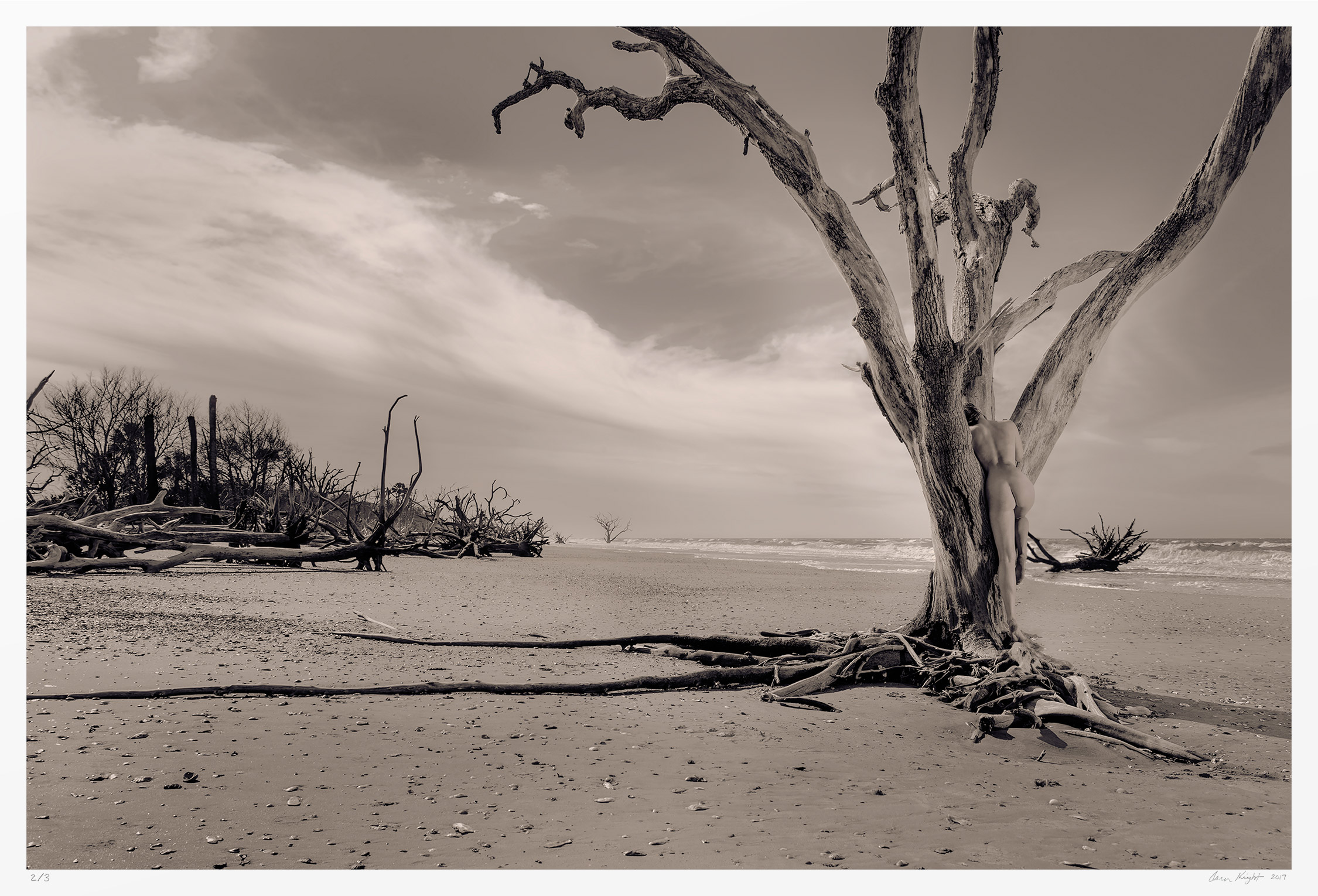
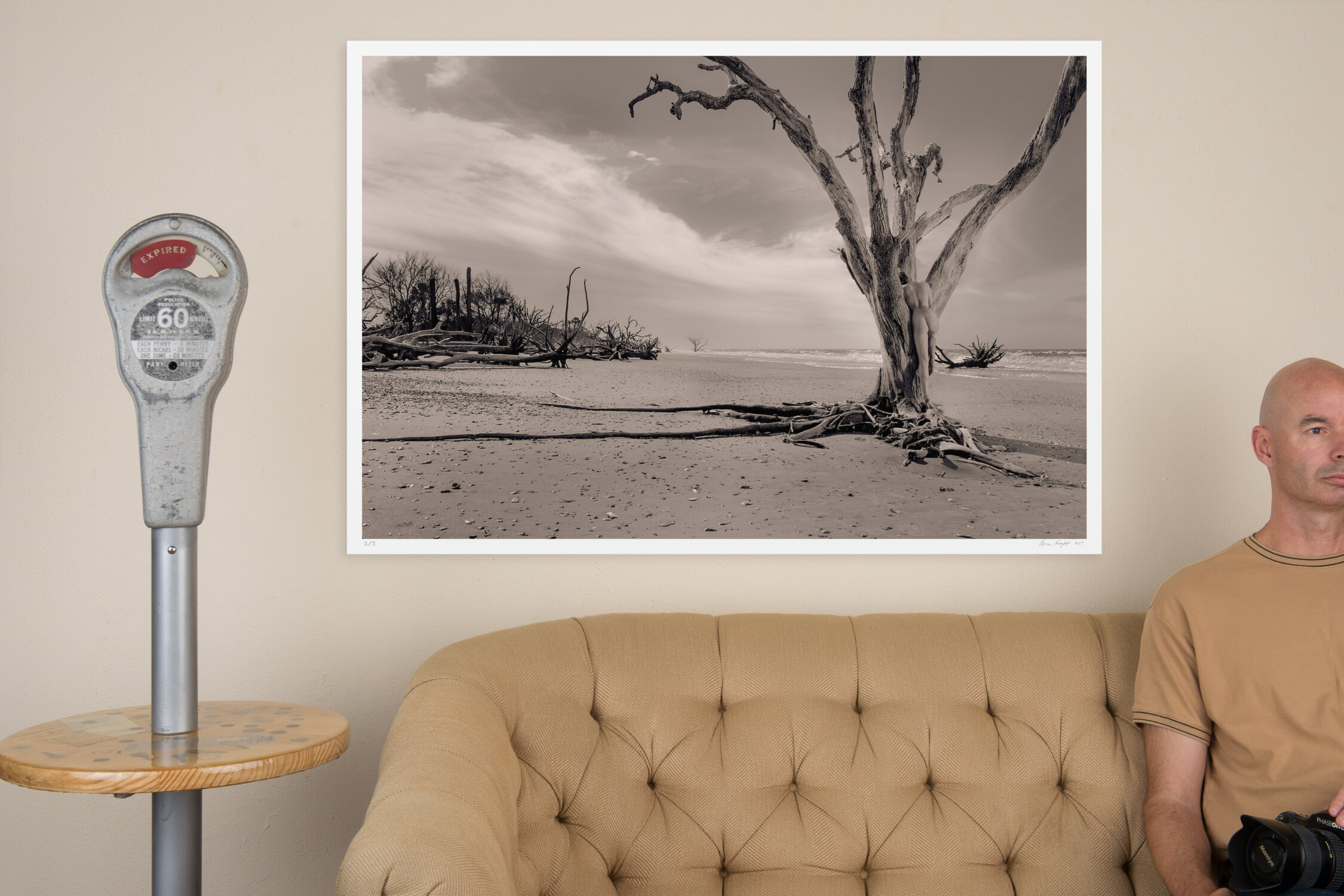
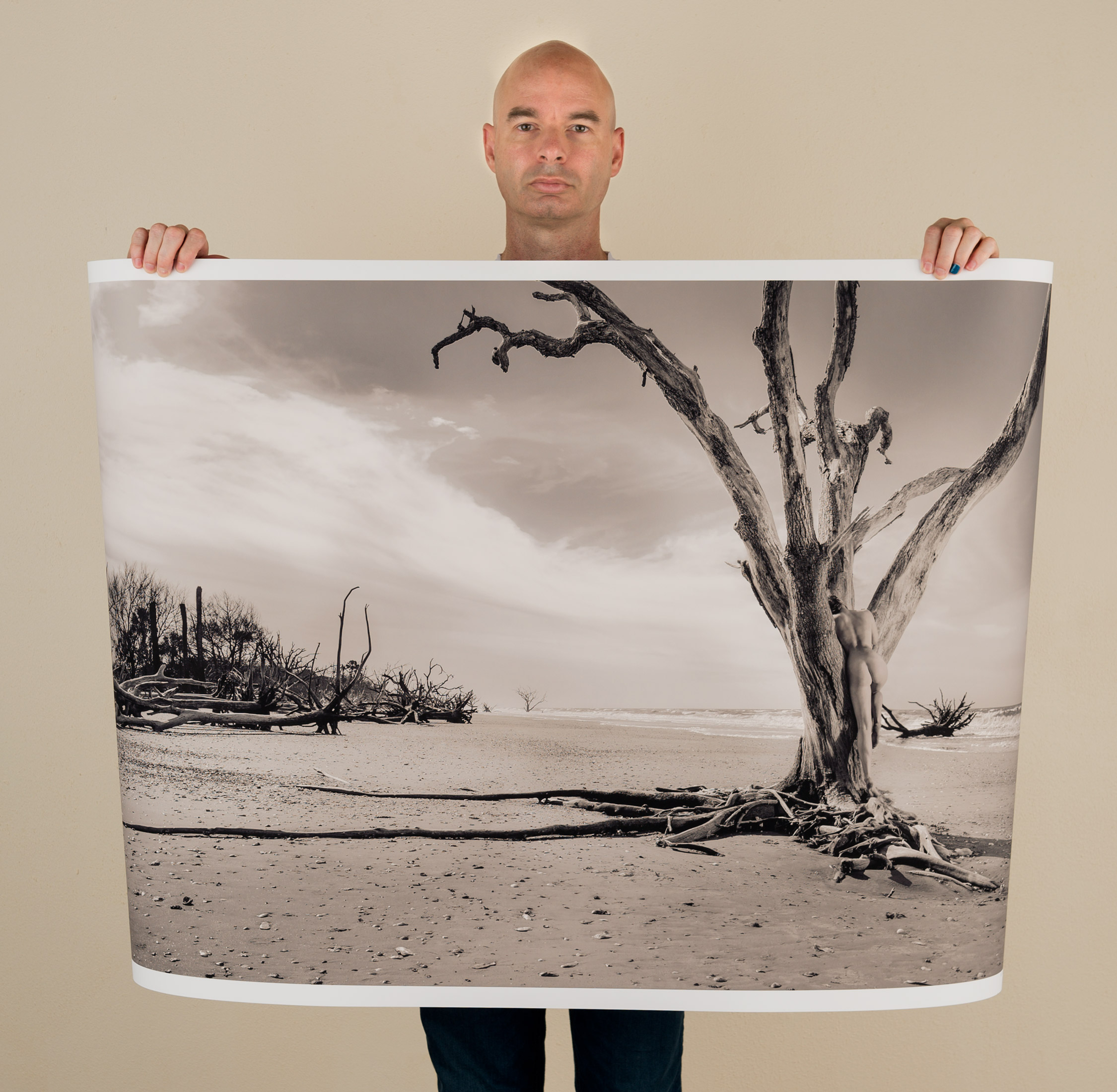
Set against a seascape, a solitary nude figure nestles within the lower limbs of a tree near the waterline. Camouflaged by the sepia tones of the art photograph, the woman’s body remains hidden in plain sight until discovered by the viewer.
Composition
The scale of her limbs help the figure to blend with the branches of the tree. The inconspicuous, back-view of the figure presents her nude body in a non-confrontational way.
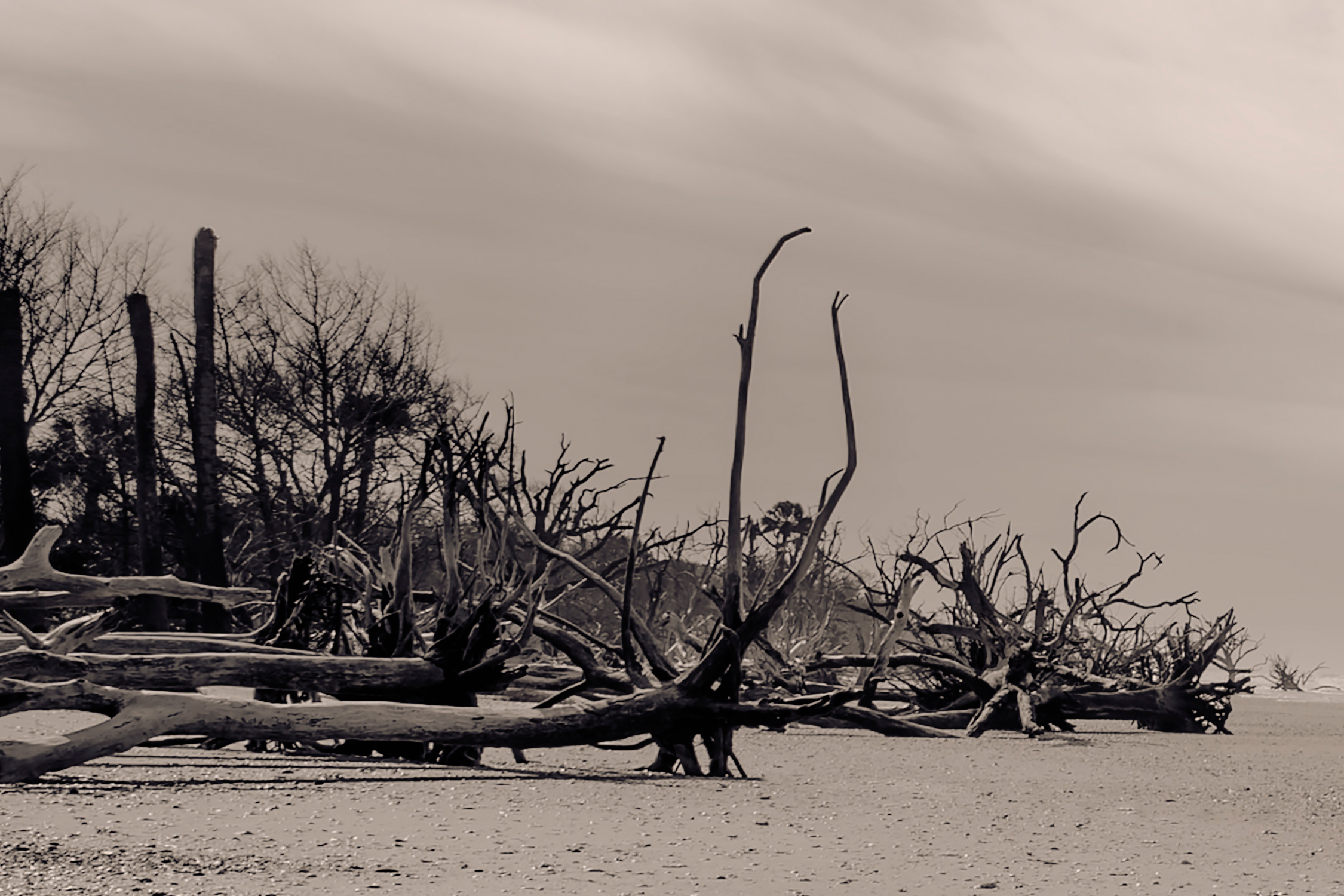
The placement and modest scale of the figure allows her to merge with her environment, making the landscape elements and the figure comparable in significance. The balance between nature and humanity portrayed here is counter to traditional landscape nudes where the landscape often serves as a backdrop to showcase the figure. The most prominent features of this sepia-toned image are the foreground tree and the dark mass of vegetation near the horizon.
Theme
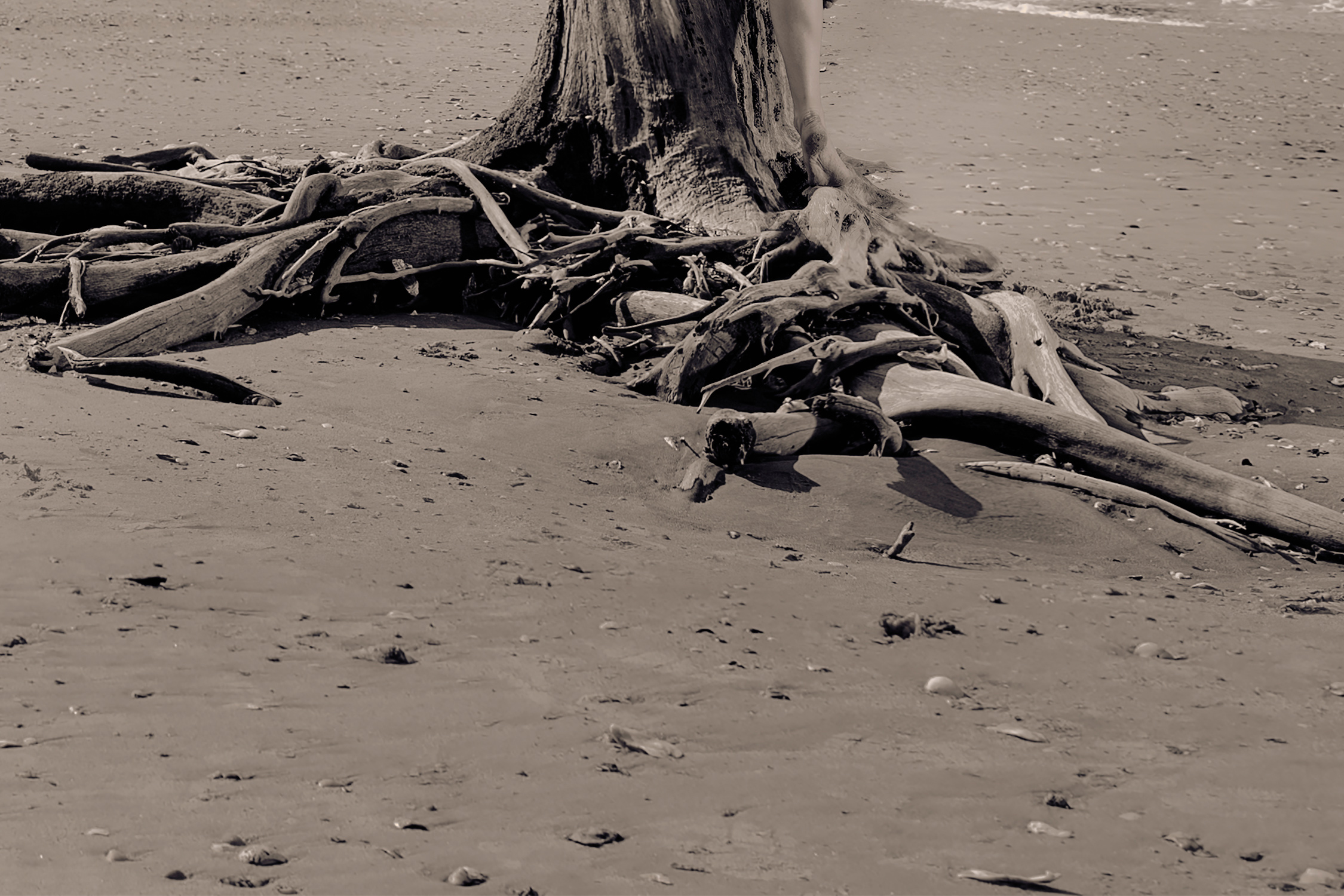
The artist has photographed many subjects on the beaches of the Atlantic ocean in the United States. The beaches of the Carolinas are sprinkled with old forests that have succumbed to a changing coastline. Through erosion, the roots are exposed and the trees die. The unearthed roots and crumbling bark expose an array of textures for the lens.
The gnarled and twisted tentacles of wood grain create patterns inside patterns. The sweeping organic curves harmonize with the contours of the body while their deathly unsightliness contrasts with the protagonist’s vibrant beauty. The mood of this landscape photograph is expressed by positioning the body at deliberate angles to the tree and the viewer.
Inspiration
The allure of the sand and sea played an immense role in the development of the artist’s visual style. When he was a boy, his family lived in a house on a beach of the Persian Gulf. He remembers the watercolors and oil paintings his mother would make of coastal scenery.